
Tag: tampa bay property management

  • May 2026 Land O’ Lakes Rental Market Trends & Investor Analysis

    May 2026 Land O’ Lakes Rental Market Trends & Investor Analysis

    Executive Briefing

    What is the state of the Land O’ Lakes rental market in May 2026? Land O’ Lakes remains one of Tampa Bay’s strongest single-family rental submarkets, but investors are operating in a split market: detached rentals are holding rent power while new multifamily supply is pressuring apartment rents and vacancy.

    What are current single-family rents in Land O’ Lakes? Median single-family rents are holding around $2,330 to $2,375 per month, with detached-home rent performance roughly flat to +4% year over year depending on condition, school-zone positioning, and lease timing.

    What is the biggest investor risk? The largest near-term risk is not demand collapse. It is margin compression from elevated insurance, slower multifamily absorption, tenant affordability limits, and avoidable vacancy days that reduce NOI.

    What should landlords do now? Investors should shift from aggressive rent hikes to renewal discipline, tenant retention, tighter make-ready timelines, insurance review, and professional Tampa Bay property management that protects yield at the operating level.

    Land O Lakes rental market trends in May 2026 tell a more nuanced story than the headlines suggest. Land O’ Lakes continues to benefit from inbound migration, household formation, and the broader Pasco County growth corridor. The area has earned national attention as one of the hottest buying markets in the country, but the rental sector is no longer moving as one uniform asset class.

    For investors, the key distinction is between newly delivered multifamily inventory and single-family rental homes. Multifamily operators are absorbing a heavy supply pipeline across Pasco County, while single-family rentals continue to benefit from delayed homeownership, elevated mortgage rates near 6.5%, and tenant demand for more space.

    That divergence changes the management playbook. In 2024 and 2025, many landlords could rely on market rent growth to cover operating mistakes. In May 2026, the better strategy is asset-management discipline: reduce vacancy days, protect resident quality, control turnover costs, and defend Net Operating Income before chasing another marginal rent increase.

    Land O Lakes Rental Market Trends: May 2026 Snapshot

    The headline for May 2026 is structural divergence. Pasco County’s apartment pipeline has created a temporary absorption gap, but single-family rental demand remains comparatively resilient because many would-be buyers are still renting longer than expected.

    Metric May 2026 Reading Investor Interpretation
    Median Single-Family Rent (SFR) ~$2,330 – $2,375/mo Detached homes are holding steady to roughly +4% YoY, especially when priced correctly and rent-ready.
    Average Multifamily / Apartment Rent ~$1,792 – $1,848/mo Apartment rents are down approximately 1.5% to 1.8% YoY as new supply competes for tenants.
    Pasco Multifamily Vacancy ~10.3% New deliveries are outpacing near-term absorption, creating concessions and pricing pressure in apartments.
    Renter Budget Concentration ~68% seek $1,501 – $2,000/mo Affordability is the constraint. SFR investors must justify premiums through condition, location, pets, school access, and service quality.
    Top Expense Threat Florida landlord insurance averaging over $5,300/year Expense inflation can erase rent gains unless the asset is managed for lower turnover, fewer preventable repairs, and stronger renewal economics.

    Why the Buying Boom Does Not Automatically Mean Easy Rent Growth

    Land O’ Lakes has become a migration-driven ownership market because it offers newer housing stock, access to Tampa employment nodes, family-oriented subdivisions, and relative affordability compared with closer-in Tampa neighborhoods. Those fundamentals are real. But investors should not confuse buyer demand with unlimited rental pricing power.

    The local tenant pool is budget-sensitive. When roughly 68% of renters are concentrated between $1,501 and $2,000 per month, a detached home priced above $2,300 must compete on more than square footage. It needs clean presentation, working systems, responsive maintenance, a credible move-in timeline, and a lease structure that reduces friction.

    This is where operational execution affects single-family rental yield Florida investors care about. A $75 monthly rent increase is worth $900 annually before vacancy and turnover. One avoidable vacant month on a $2,350 rental can wipe out more than two years of that increase. The math favors retention when the tenant is qualified and the renewal spread is reasonable.

    Pasco County Real Estate Investing: Multifamily Supply Is Resetting Tenant Expectations

    The most important Pasco County real estate investing variable in May 2026 is new multifamily supply. With more than 1,850 new multifamily units coming online across Pasco County, apartment operators are competing aggressively for lease-up velocity. That competition can show up in concessions, flexible move-in timing, amenity-heavy marketing, and slower effective rent growth.

    Single-family rentals are insulated, but not immune. A tenant who wants a yard, garage, school-zone location, and lower density is still unlikely to treat an apartment as a perfect substitute. However, apartment concessions can influence the lower end of SFR demand, especially for townhomes, older homes, or properties with deferred maintenance.

    Investors should underwrite this as a tenant-choice environment, not a landlord-dominant sprint. The winners will be operators who reduce days on market, respond quickly to qualified leads, price by micro-market rather than county averages, and avoid condition issues that make an apartment concession look more attractive.

    Single-Family Rental Yield Florida Investors: Protect NOI Before Chasing Rent

    For single-family rental yield Florida investors, May 2026 is a margin-management market. Gross rent is holding up, but NOI is under pressure from insurance, maintenance inflation, property taxes, HOA compliance, and turnover costs. The operational question is not simply, “What can this home rent for?” It is, “What rent produces the best risk-adjusted annual income after vacancy and expenses?”

    At Releve Property Management, we look at rental performance through that asset-management lens. A property that rents for $2,375 after 35 days vacant may underperform a property rented at $2,325 after 10 days vacant. The visible rent number is only one line item. Yield is protected through lease timing, resident quality, maintenance control, renewal strategy, and make-ready speed.

    Insurance Is the Expense Line Investors Cannot Ignore

    Florida insurance premiums remain one of the clearest threats to landlord cash flow. With standard rental asset coverage averaging more than $5,300 per year, even healthy rent growth can fail to translate into stronger NOI.

    Investors should review insurance assumptions before acquisition, renewal, and lease pricing decisions. That includes deductible exposure, roof age, wind coverage, flood considerations, carrier stability, and whether rent loss coverage is appropriate. Insurance is not just a back-office cost. In a higher-premium state, it is a core underwriting variable.

    Operational Strategy for Land O’ Lakes Landlords in May 2026

    The current market rewards landlords who manage like operators, not speculators. Releve’s recommended playbook for Land O’ Lakes owners is straightforward:

    • Price to reduce vacancy days: Use active competition and showing feedback, not stale rent estimates.
    • Prioritize renewals: A qualified tenant at a fair renewal rate can outperform an aggressive vacancy-and-relist strategy.
    • Tighten make-ready timelines: Every day between possession, repair approval, photos, and listing is lost yield.
    • Protect property condition: Preventive maintenance supports resident satisfaction and reduces larger repair surprises.
    • Screen for durability: Income, credit, rental history, pet risk, and move-in timing all affect real return.
    • Review insurance annually: Premium increases should be part of renewal math and acquisition underwriting.

    Where Tampa Bay Property Management Creates Measurable Value

    In a market this nuanced, Tampa Bay property management should do more than collect rent and dispatch vendors. The right operating partner should help investors protect yield through pricing discipline, tenant placement, renewal strategy, repair oversight, and transparent owner reporting.

    For Land O’ Lakes rentals, that means understanding the difference between Bexley, Connerton, Lake Padgett, Wilderness Lake, Oakstead, Angeline, and smaller infill neighborhoods. Each submarket has a different tenant profile, showing cadence, HOA friction point, and pricing ceiling. Broad Tampa Bay averages are useful for orientation, but they are not enough to manage an asset.

    Releve Property Management positions each rental around the owner’s actual objective: lower vacancy, cleaner maintenance coordination, stronger tenant fit, and better net income over the full lease cycle. That is the difference between rent collection and operational asset management.

    Investor Outlook: What to Watch Through Summer 2026

    Through the summer leasing season, investors should watch four signals:

    • Days on Market (DOM): Rising DOM means pricing or condition needs to be corrected quickly.
    • Apartment concessions: Multifamily lease-up pressure can influence tenant expectations even in the SFR segment.
    • Renewal acceptance: Pushback from good tenants may indicate affordability resistance before the listing market shows it.
    • Insurance renewal notices: Premium changes should be translated into updated NOI projections immediately.

    The strongest investors will not wait for lagging annual reports. They will adjust pricing, leasing, and retention strategy in real time.

    Conclusion: Land O Lakes Rental Market Trends Favor Disciplined Operators

    Land O Lakes rental market trends in May 2026 point to a resilient but more selective single-family rental market. Demand remains supported by migration, delayed homeownership, and the appeal of detached housing in Pasco County. But new apartment supply, affordability limits, and rising insurance costs mean investors need to manage the spread between gross rent and actual NOI more carefully.

    For landlords and portfolio owners, the opportunity is still there. The strategy has changed. This is a market for disciplined pricing, tenant retention, faster turns, and property management that treats every vacancy day and repair decision as an investment-performance variable.

    Releve Property Management helps Land O’ Lakes and Tampa Bay rental owners protect yield, minimize vacancy days, and improve operating consistency across the full lease cycle. For investors evaluating Pasco County real estate investing opportunities, the next move should be operational clarity, not guesswork.

     

  • Is Hiring a Property Manager Worth It for One Rental Home?

    Is Hiring a Property Manager Worth It for One Rental Home?

    For many landlords, especially owners with one rental home, this is one of the most important decisions they will make.

    Is hiring a property manager worth it, or is it better to save the fee and handle everything yourself?

    The honest answer is that it depends on your time, your systems, your tolerance for risk, and how well you execute the parts of ownership that directly affect vacancy, tenant quality, maintenance, and cash flow.

    What Self-Managing Actually Requires

    Some landlords think self-managing means collecting rent and taking the occasional maintenance call. In reality, good self-management usually requires much more:

    • accurate rental pricing
    • listing setup and marketing
    • lead response and showing coordination
    • application review and screening
    • lease execution and move-in handling
    • maintenance coordination
    • resident communication
    • renewals, notices, and turnover management

    If you do all of that well, self-management can work. If you do some of it inconsistently, the cost of mistakes can be larger than the fee you were trying to avoid.

    When Hiring a Property Manager Is Usually Worth It

    Hiring a property manager is often worth it when one or more of these are true:

    • you do not live close to the property
    • you do not want to handle tenant communication directly
    • you are unsure how to price the property correctly
    • you do not want to manage screening, leasing, and maintenance yourself
    • you have a demanding job or limited availability
    • you want more predictable operations and fewer surprises

    For many one-property landlords, the biggest value is not just time savings. It is reducing expensive mistakes.

    The Hidden Cost of Doing It Yourself Poorly

    Owners often compare property management only against the monthly fee. But the real comparison should include the cost of mistakes like:

    • pricing too high and extending vacancy
    • pricing too low and sacrificing revenue
    • placing a weak tenant
    • handling maintenance too slowly
    • letting communication problems turn into turnover
    • running an avoidable make-ready gap between residents

    A single bad tenant placement or one long vacancy often costs more than many owners expect.

    When Self-Management Can Still Make Sense

    Self-managing may still make sense if:

    • you know the local market well
    • you have strong systems
    • you respond quickly
    • you are comfortable screening and leasing
    • you can manage maintenance without letting small issues drag out
    • you truly want to stay involved in day-to-day operations

    Some landlords do this very well. But the key phrase is very well. Average self-management often leads to average or below-average results.

    What One Rental Owners Should Think About

    If you only own one rental home, the decision can feel more personal because the management fee feels more visible. But one-home landlords are often the people most exposed to mistakes because they do not have portfolio scale to absorb them.

    That means the right question is not just, “Can I manage this myself?” The better question is, “Can I manage this property at a level that protects my time, income, and long-term ROI?”

    How to Decide

    Ask yourself these questions:

    • Do I have time to respond quickly when leasing activity starts?
    • Am I confident in how to price the home?
    • Do I want to handle tenant communication and issues directly?
    • Do I have reliable maintenance systems?
    • Would I rather save the fee, or avoid the operational burden?

    Your answers usually make the decision clearer.

    Final Takeaway

    Yes, hiring a property manager can absolutely be worth it for one rental home, especially if you want better leasing consistency, less operational stress, and fewer expensive mistakes.

    For some owners, self-management is the right fit. But for many, management becomes worthwhile the moment they compare the fee against the real cost of poor pricing, weak tenant placement, preventable vacancy, or slower maintenance response.

    If you want to understand what management would look like for your property, the best next step is to talk through your goals and the property itself.

    Get Started

    If you want to understand your rental’s income potential first:

    Get Free Rental Analysis

    FAQs

    Is property management worth it for just one house?

    Often yes, especially if you want to reduce stress, improve leasing consistency, and avoid costly mistakes with pricing, screening, or maintenance coordination.

    What is the biggest benefit of hiring a property manager?

    For many owners, it is a combination of time savings, better systems, and fewer expensive operational mistakes.

    Can self-managing save money?

    It can, but only if you execute well. Poor self-management can create vacancy, turnover, or tenant problems that cost more than the saved fee.

    Who should consider self-managing?

    Owners who know the local market, have time, respond quickly, and are comfortable handling leasing, maintenance, and communication directly.

    What should I do before deciding?

    Compare the management fee against the real cost of your time, the risk of mistakes, and how confident you are in running the full rental process yourself.

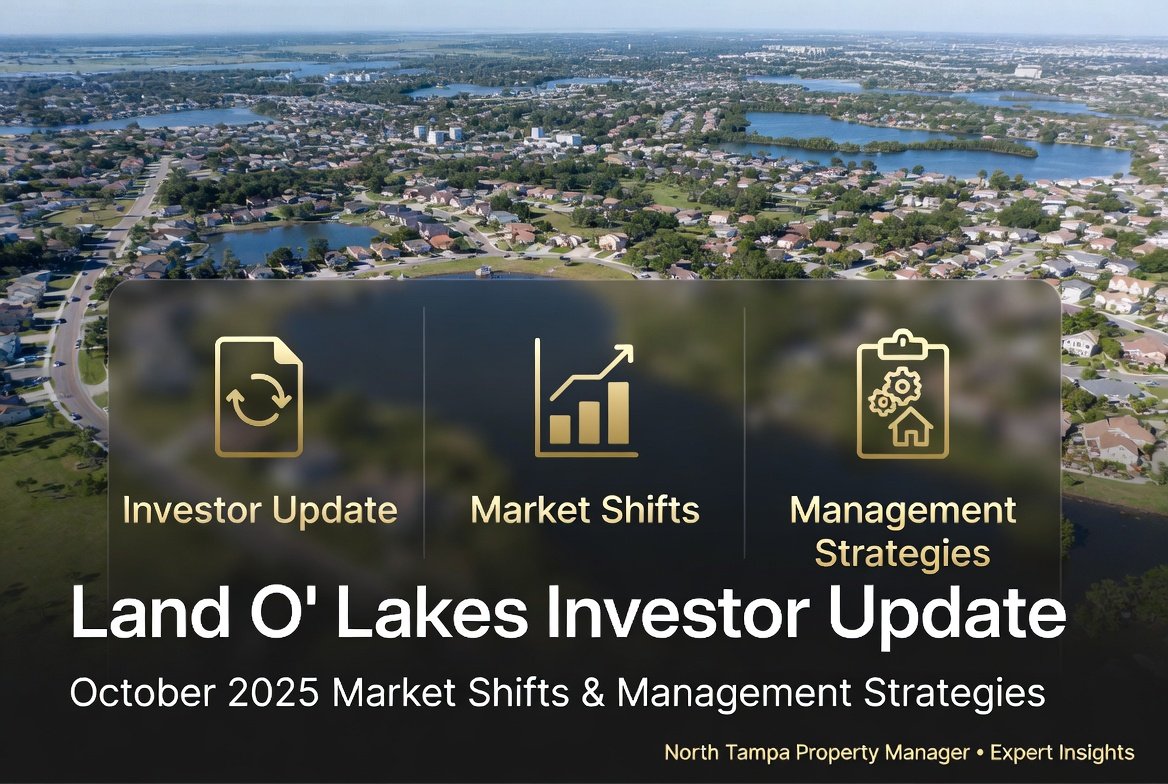
  • Land O’ Lakes Investor Update: October 2025 Market Shifts & Management Strategies

    Land O’ Lakes Investor Update: October 2025 Market Shifts & Management Strategies


    For the astute real estate investor, understanding market cycles isn’t just academic—it’s the key to maximizing returns and mitigating risk. The Land O’ Lakes rental market in October 2025 is undergoing a significant transition, presenting both new challenges and unique opportunities. As your strategic partner in property management, we’re breaking down the data you need to make informed decisions.

    The Macro View: A Return to Normalcy Means Strategic Management is Key

    The era of skyrocketing appreciation and effortless tenant placement is behind us. The market has cooled into a state of balanced equilibrium. For investors, this means that proactive, professional property management is no longer a “nice-to-have” but a critical component for protecting your asset and ensuring cash flow.

    The most critical metric for investors right now is rising inventory.

    MONTHS OF SUPPLY: FROM FEEDING FRENZY TO COMPETITIVE MARKET
    Investor-Owned Condos: [■■■■■■■■■□] 6.5 Months
    Single-Family Rentals: [■■■■■■□□□□] 5.2 Months
    Data reflects total housing inventory, indicating increased competition for both sales and rentals.

    This increase in “For Sale” inventory directly impacts the rental market. More homes on the market mean fewer desperate renters, giving them more power to be selective.

    Rental Market Performance: Holding Strong, But Pace is Slowing

    While home sale price growth has moderated, the demand for quality rentals in Land O’ Lakes remains robust, driven by the area’s strong population growth and its appeal to families. However, the dynamics of leasing have changed.

    Land O’ Lakes Investment Property Metrics (October 2025)

    MetricFigureYoY ChangeInvestor Implication
    Median Rent (SFR 3/2)$2,350+2.2%Slower growth requires tighter expense management.
    Average Days to Lease28 days+40%Vacancy costs are now a real risk; pricing is critical.
    Rental Price Concessions15% of Listings+10%More landlords are offering 1-2 weeks free rent to attract tenants.
    Tenant Application Volume4 per listing-25%Less competition means more rigorous screening is required.

    The data is clear: the “days on market” is the new battleground. An empty property costs you $78 per day (at $2,350/mo). Shaving just one week off your vacancy period is equivalent to a 2.5% annual rent increase.

    Strategic Recommendations for Land O’ Lakes Investors

    For Current Portfolio Owners:

    • Tenant Retention is Your #1 Tool: The cost of turnover is now higher than ever. Consider a below-market renewal increase of 2-3% to retain a proven, paying tenant. A one-month vacancy wipes out the profit from 12+ months of aggressive rent hikes.
    • Avoid the “Testing the Waters” Trap: Overpricing your rental leads to extended vacancies, which cost more than pricing it correctly from day one. We use real-time market data to set the optimal price, not hopeful guesses.
    • Differentiate Your Property: With more choices, tenants will bypass poorly maintained homes. A fresh coat of paint, professional cleaning, and modern smart-home features (like a video doorbell) can be the difference between a 15-day and a 45-day vacancy.

    For Acquisitions-Focused Investors:

    • Due Diligence is Paramount: The balanced sales market means you can now include inspection and financing contingencies. Use this leverage. Thoroughly vet the roof, HVAC, and plumbing before you buy.
    • Focus on Cash Flow, Not Just Appreciation: With modest price growth (median price at $465,000, +3.3% YoY), your investment thesis must be grounded in solid monthly returns. Run the numbers conservatively, assuming market rents and a 5-7% vacancy factor.
    • The “Value-Add” Opportunity: Well-priced, slightly dated homes represent a significant opportunity. A strategic $10,000-$15,000 investment in cosmetic updates (flooring, lighting, cabinets) can often command a $200-$300/month premium in rent, drastically improving your CAP rate.

    The Bottom Line for Investors

    The Land O’ Lakes market in October 2025 is separating the amateur investors from the professionals. Success now hinges on operational excellence: precise pricing, superior marketing, proactive maintenance, and strategic tenant relations.

    This is not a market to manage from a distance. It requires a local, data-driven, and aggressive management strategy to protect your investment and maximize your returns.

    Ready to optimize your Land O’ Lakes investment property? Our hyper-local management strategies are designed specifically to navigate this new market reality. Schedule a free portfolio review with our team today.

  • Managing Late Rent Payments: A Guide for Tampa Bay Landlords

    Managing Late Rent Payments: A Guide for Tampa Bay Landlords

    Introduction

    Late rent payments can disrupt cash flow and strain landlord-tenant relationships, a challenge many Tampa Bay landlords face. With no state-mandated grace period in Florida and a growing rental market, knowing how to handle late payments is crucial. This guide from Releve Property Management offers practical steps, legal insights, and local tips to manage late rent effectively, ensuring your investment thrives in Tampa Bay’s unique landscape.

    Understanding Florida’s Late Rent Laws

    Florida law doesn’t require a grace period for rent, meaning payment is due on the date specified in the lease—typically the 1st of the month. If unpaid, landlords can:

    • Charge late fees: Up to the greater of $20 or 20% of the monthly rent, if stipulated in the lease.
    • Issue a 3-day notice: After rent is late, landlords can deliver a notice giving tenants three business days to pay or vacate, per Florida Statutes § 83.56.

    For example, if rent is $1,500, a landlord could charge a $300 late fee (20%) as long as it’s in the lease. Knowing these rules helps Tampa Bay landlords act swiftly and legally.

    Step-by-Step: Handling Late Rent Payments

    1. Send a Reminder: Before the due date (e.g., on the 28th), send a friendly text or email. Proactive communication often prevents delays.
    2. Follow Up Post-Due Date: If rent isn’t paid by the 2nd, call or email again, referencing the lease terms and late fee policy.
    3. Issue a Formal Notice: By the 3rd or 4th, deliver the 3-day notice in person, by mail, or posted on the property. Include the amount due, including late fees.
    4. Negotiate if Needed: For reliable tenants, consider a payment plan—e.g., splitting the amount over two months—documented in writing.
    5. Escalate to Eviction: If unpaid after three days, file for eviction at the Hillsborough or Pinellas County Clerk’s office, typically costing $185 plus attorney fees.

    Preventing Late Payments

    • Screen Tenants Thoroughly: Check credit, rental history, and references to ensure reliability.
    • Offer Incentives: Discount rent by $25 for payments received by the 28th, encouraging early compliance.
    • Use Online Portals: Platforms like PayRent streamline payments, reducing excuses for delays.

    Tampa Bay-Specific Tips

    • Hurricane Season Preparedness: After storms like Helene in 2024, tenants may struggle financially. Offer temporary leniency but document agreements to avoid disputes.
    • Local Resources: Refer struggling tenants to Bay Area Legal Services for rental assistance, easing pressure while maintaining professionalism.

    When to Start the Eviction Process

    If tenants don’t pay after the 3-day notice, file for eviction. In Tampa Bay:

    • File at the county courthouse (e.g., Hillsborough County Clerk).
    • Expect a 5-10 day process for a hearing if contested, or quicker if uncontested.
    • Costs range from $185-$300, plus sheriff fees for lockout if needed.

    Partnering with Releve Property Management can simplify this, as we handle notices, filings, and tenant communication.

    Conclusion

    Managing late rent payments in Tampa Bay requires a blend of legal knowledge, proactive strategies, and local insight. From enforcing Florida laws to leveraging preventive measures, landlords can protect their investments. Contact Releve Property Management for expert support tailored to Tampa Bay’s rental market—let us handle the details so you can focus on growing your portfolio.

    Unexpected Detail

    Post-hurricane financial strain was a notable factor, with tenants facing repair delays (WUSF), suggesting temporary flexibility could maintain tenant relations—a unique Tampa Bay challenge.

    Citations